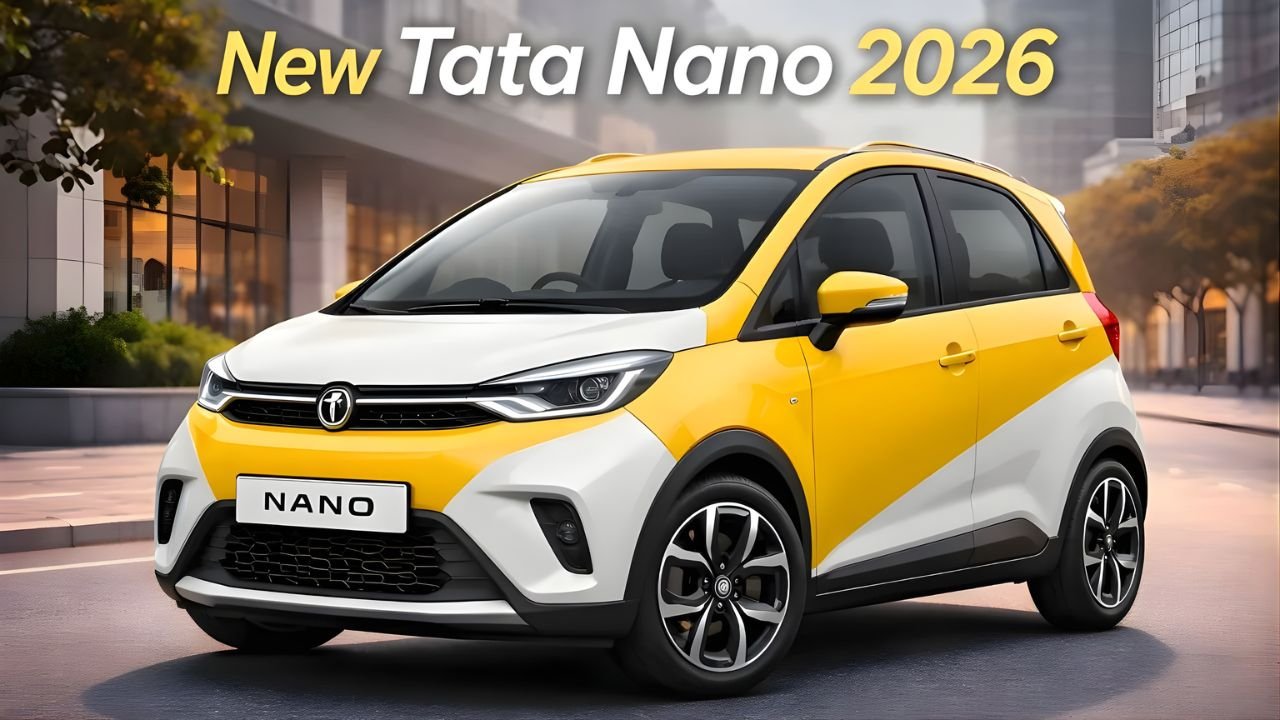
Tata Nano EV 2026: Tata Motors has officially announced the return of one of India’s most iconic car names in an all-new electric avatar with the Tata Nano EV 2026. Positioned as India’s most affordable electric car, the Nano EV is aimed squarely at cost-conscious urban buyers who want to move away from petrol without stepping into expensive EV territory. With rising fuel prices, increasing city congestion, and growing EV acceptance, Tata is banking on the Nano EV to democratise electric mobility for Indian households once again.
Key Specifications – Tata Nano EV 2026
| Specification | Details |
|---|---|
| Body Type | Compact 5-door hatchback |
| Seating Capacity | 4 |
| Powertrain | Single electric motor |
| Battery Pack | 38 kWh lithium-ion |
| Claimed Range | Up to 650 km (IDC) |
| Real-World Range | 380–420 km |
| Power Output | 45 PS |
| Torque | 110 Nm |
| Transmission | Single-speed automatic |
| Drive Type | Rear-wheel drive |
| Charging Time (AC) | 0–100% in approx. 7 hours |
| Fast Charging (DC) | 20–80% in around 50 minutes |
| Expected Price (Ex-showroom) | ₹4.99 lakh to ₹6.79 lakh |
| Launch Year | 2026 |
Exterior Design and Styling
The Tata Nano EV retains the instantly recognisable compact proportions of the original Nano but has been modernised to suit present-day expectations. The overall footprint remains extremely small, making it ideal for narrow Indian lanes and dense traffic conditions. The design is cleaner and more mature, with rounded edges replaced by sharper lines and a more upright stance.
EV-specific touches include a closed front fascia, LED daytime running lamps, redesigned headlamps, and subtle blue accents. The short overhangs and tall roof help maximise cabin space despite the small size. Alloy wheels are expected on higher variants, while lower trims keep steel wheels to maintain affordability.
Electric Motor, Performance, and Indian Road Experience
The Nano EV uses a compact electric motor tuned specifically for city usage. With 45 PS and instant torque delivery, it feels quicker off the mark than its petrol predecessor, especially in stop-and-go traffic. Acceleration is smooth and silent, making daily commuting less stressful in crowded urban environments.
On Indian roads, the Nano EV’s lightweight construction works in its favour. The suspension is tuned for low-speed comfort, handling potholes and speed breakers reasonably well for its size. High-speed stability is adequate for occasional highway use, but this remains a city-focused car designed for short to medium-distance travel.
Driving Range and Efficiency for Indian Buyers
Range is the Nano EV’s biggest talking point. Tata claims up to 650 km under IDC testing conditions, which is optimistic but not uncommon in EV testing cycles. In real-world Indian usage, including traffic, air-conditioning, and mixed driving patterns, buyers can expect a practical range of around 380 to 420 km.
For most Indian city users driving 25 to 40 km per day, this means charging once every 7 to 10 days. Low running costs, estimated at a fraction of petrol expenses, make the Nano EV especially attractive for daily commuters and budget-focused families.
Interior Comfort and Cabin Practicality
Inside, the Nano EV focuses on simplicity and usability. The cabin layout is straightforward, with a compact dashboard and easy-to-read controls. Seating is designed for four occupants, with good headroom thanks to the tall roofline. While rear seat space is best suited for two adults or children, it remains practical for city travel.
Materials are durable and easy to maintain, keeping long-term ownership costs low. The flat floor improves legroom, and the compact boot is sufficient for daily essentials, grocery runs, and small luggage.
Features and Technology
Despite its entry-level positioning, the Tata Nano EV offers essential modern features. Higher variants are expected to get a touchscreen infotainment system with smartphone connectivity, a digital instrument cluster displaying range and charging information, power windows, and remote locking.
Tata’s connected car technology enables basic vehicle monitoring, charging alerts, and location tracking via a mobile app. These features are designed to add convenience without increasing complexity or cost.
Safety, Build Quality, and Regulations
Safety standards have evolved significantly since the original Nano, and Tata has addressed this in the EV version. The Nano EV is built on a reinforced structure designed to meet current Indian safety regulations. Standard safety features include dual airbags, ABS with EBD, rear parking sensors, seatbelt reminders, and speed alerts.
The vehicle complies with all applicable Indian EV norms and safety standards, offering reassurance to buyers concerned about reliability, long-term usage, and resale value.
Variants and Colour Options
Tata Motors is expected to offer the Nano EV in multiple variants to cater to different budgets. Entry-level trims focus on affordability and essential features, while higher variants add infotainment, connected technology, and cosmetic upgrades. Colour options are likely to include white, silver, grey, light blue, and a bright EV-specific shade aimed at younger buyers.
Price Positioning and Competition
With an expected starting price of ₹4.99 lakh ex-showroom, the Tata Nano EV undercuts most electric cars currently on sale in India. It positions itself below models like the Tata Tiago EV and MG Comet EV, offering a lower entry point into electric mobility. Tata’s strong EV ecosystem, expanding charging network, and widespread service support give the Nano EV a clear advantage in this price-sensitive segment.
Who Should Buy the Tata Nano EV
The Nano EV is ideal for urban commuters, first-time car buyers, small families, and households looking for a second car with extremely low running costs. It suits buyers who prioritise affordability, ease of driving, and low maintenance over performance or luxury features.
Final Verdict
The Tata Nano EV 2026 brings the original Nano philosophy into the electric era. It focuses on what matters most to Indian buyers: price, practicality, usable range, and low ownership costs. While it does not aim to be premium or powerful, it succeeds in making electric mobility accessible to a wider audience. For city-focused users looking for the most affordable way to go electric, the Nano EV makes a compelling case.
FAQs
What is the real-world range of the Tata Nano EV?
In Indian driving conditions, the expected real-world range is around 380 to 420 km on a full charge.
Is the Tata Nano EV suitable for highway driving?
It can handle short highway trips, but it is primarily designed for city and suburban usage.
Can the Nano EV be charged at home?
Yes, it supports standard AC home charging, allowing overnight charging using a regular home setup.
How does it compare to the Tata Tiago EV?
The Nano EV is more affordable and compact, while the Tiago EV offers more power, space, and features.
Will the Nano EV have good resale value in India?
Given Tata’s brand strength and growing EV acceptance, resale value is expected to remain stable in the long term.