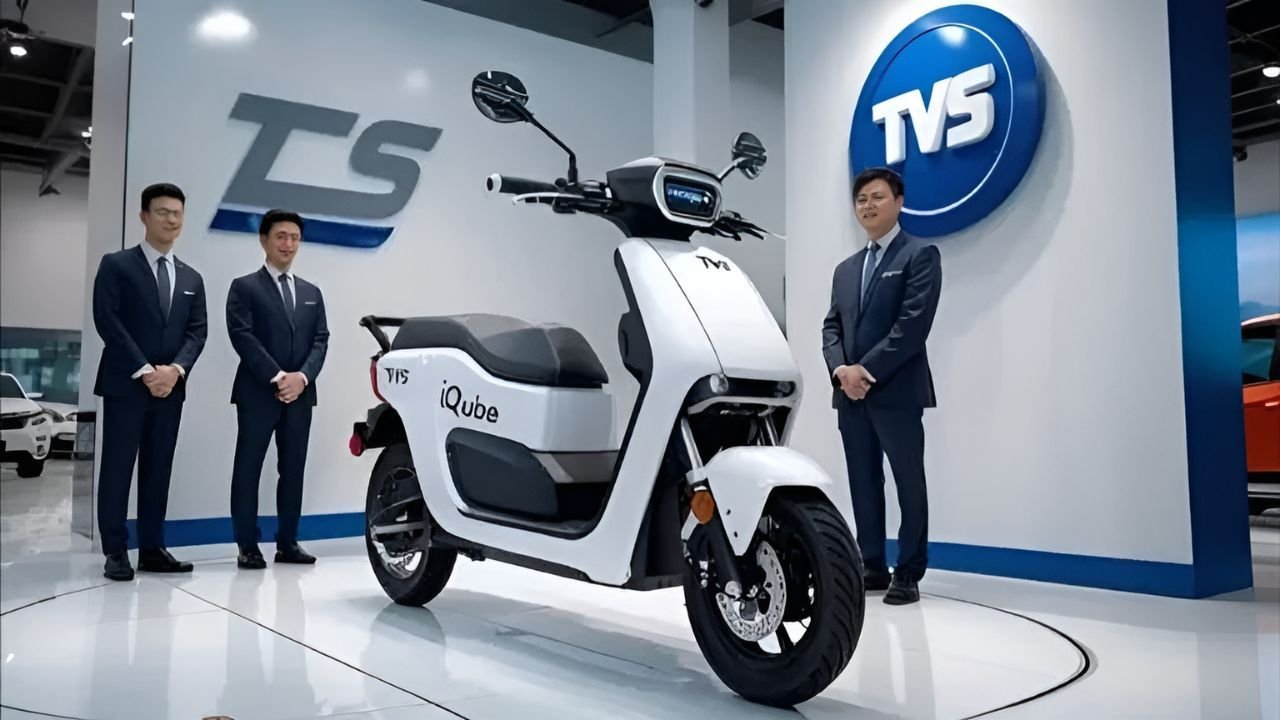
TVS iQube 2026 Launch: The electric two-wheeler market in India is entering a more mature phase in 2026, and the launch of the TVS iQube 2026 reflects how established manufacturers are raising benchmarks for range, charging convenience and overall ownership confidence. TVS Motor Company has officially unveiled the latest iQube with a significantly improved claimed range of up to 445 kilometres, faster charging capability and a sharper focus on real-world urban usability. Aimed at daily commuters, family users and EV-conscious buyers, the new iQube positions itself as a practical electric scooter designed specifically for Indian traffic, road conditions and running cost expectations.
Key Specifications – TVS iQube 2026
| Specification | Details |
|---|---|
| Motor Type | Hub-mounted electric motor |
| Battery Pack | Advanced lithium-ion battery |
| Claimed Range | Up to 445 km (IDC) |
| Real-World Range | 180–220 km (estimated) |
| Charging Time | 0–80% in 60 minutes (fast charging) |
| Top Speed | 85 km/h |
| Riding Modes | Eco, Power |
| Kerb Weight | Approx. 118 kg |
| Brakes | Disc (Front), Drum (Rear) |
| Connectivity | SmartXonnect with app |
| Starting Price | ₹1.35 lakh (ex-showroom) |
Exterior Design and Styling
The TVS iQube 2026 retains its clean, family-friendly design language while receiving subtle updates to keep it visually fresh. The overall shape remains familiar, which works well for Indian buyers who prefer conservative styling over radical designs. The LED headlamp unit now features improved light spread, especially useful for early morning and late-night city commutes.
Body panels are neatly finished, with tight panel gaps and solid paint quality that reflect TVS’s focus on build consistency. The flat floorboard design continues to be one of the iQube’s strengths, making it convenient for carrying bags or small groceries, a daily requirement for many Indian households. Alloy wheels and refreshed colour options add a touch of modern appeal without compromising practicality.
Motor, Performance and Real-World Riding Experience
The electric motor on the TVS iQube 2026 has been tuned for smooth and predictable performance rather than aggressive acceleration. In dense Indian traffic, this approach makes the scooter easy to control, especially for riders transitioning from petrol scooters. Throttle response is linear, and the scooter pulls cleanly from standstill without jerks.
In Power mode, the iQube feels confident enough for city flyovers and short highway stretches, comfortably maintaining 60–70 km/h. Eco mode prioritises efficiency and is ideal for daily office commutes. The suspension setup is well-suited to Indian roads, absorbing potholes and broken patches effectively, while the low centre of gravity improves stability and rider confidence.
Driving Range and Efficiency for Indian Usage
Range anxiety remains a key concern for EV buyers in India, and TVS has addressed this with a headline claimed range of 445 km. While this figure is based on test cycles, real-world conditions tell a more practical story. In mixed city riding, users can expect around 180–220 km on a full charge, depending on riding mode, load and traffic conditions.
For most urban users, this means charging once or twice a week, which significantly reduces running costs compared to petrol scooters. With electricity costs far lower than petrol prices, the iQube offers substantial savings over the long term, especially for riders covering 30–50 km daily.
Charging Convenience and Ownership Practicality
One of the biggest upgrades on the TVS iQube 2026 is its fast-charging capability. With support for 60-minute fast charging to reach 80 percent, the scooter becomes far more practical for Indian users who may not always have overnight charging access.
Home charging remains straightforward using a standard socket, making it suitable for apartments and independent houses alike. TVS’s expanding public charging partnerships further enhance peace of mind, especially in metro cities.
Comfort, Ergonomics and Daily Usability
Comfort has always been a strong point of the iQube, and the 2026 model continues this tradition. The seat is wide and well-padded, suitable for long daily rides. The riding posture is upright, reducing strain on the back and shoulders, which is important for Indian commuters dealing with long traffic hours.
The floorboard offers ample space, and the under-seat storage is practical for a helmet or small luggage. Overall, the iQube feels designed around everyday Indian needs rather than occasional weekend use.
Features and Technology
The TVS iQube 2026 comes equipped with a modern digital touchscreen display that supports smartphone connectivity. Through the companion app, riders can access navigation, ride statistics, charging status and vehicle health information. These features add genuine value rather than being mere gimmicks.
Other practical features include regenerative braking, reverse assist for easy parking and over-the-air software updates. The interface is intuitive, ensuring even less tech-savvy users can operate it comfortably.
Safety, Build Quality and Compliance
Safety is handled by a front disc brake and rear drum brake combination, supported by a reliable braking setup suited to city speeds. The chassis feels sturdy, and the scooter’s weight distribution contributes to stable braking and cornering.
The iQube 2026 complies with all current Indian EV safety and regulatory norms. Battery protection systems are designed to handle Indian weather conditions, including high summer temperatures and monsoon humidity, which is critical for long-term reliability.
Variants and Colour Options
TVS is expected to offer the iQube 2026 in multiple variants based on battery capacity and feature levels. Colour options include White, Grey, Blue and Copper, appealing to both conservative and younger buyers. This range allows customers to choose a version that matches their budget and usage pattern.
Price Positioning and Competition
With a starting price of ₹1.35 lakh, the TVS iQube 2026 is positioned slightly above basic electric scooters but offers significantly better range, build quality and brand trust. It competes with models like the Ola S1, Ather Rizta and Bajaj Chetak Electric. While some rivals offer more aggressive performance, the iQube stands out for its balanced approach and dependable after-sales support.
Who Should Buy the TVS iQube 2026
The TVS iQube 2026 is ideal for urban professionals, family users and mature riders looking for a reliable electric scooter with low running costs. It also suits buyers who want to shift to EVs without experimenting with lesser-known brands. Those prioritising range, comfort and ownership peace of mind will find the iQube a sensible choice.
Final Verdict
The TVS iQube 2026 represents a thoughtful evolution of an already successful electric scooter. With improved range, faster charging and a strong focus on real-world usability, it addresses the key concerns of Indian EV buyers. While it may not be the most aggressive or flashy option, it excels where it matters most: efficiency, comfort and trust. For buyers seeking a dependable electric scooter for everyday Indian conditions, the iQube 2026 makes a compelling case.
FAQs
Is the 445 km range achievable in real-world riding?
The figure is based on test conditions. Real-world range is expected to be around 180–220 km.
How long does it take to charge the TVS iQube 2026 at home?
Using a standard home socket, a full charge can take around 4–5 hours.
Does the iQube support fast charging?
Yes, it supports fast charging with 0–80% possible in about 60 minutes.
Is the TVS iQube suitable for long-distance rides?
It is best suited for city and short intercity travel rather than extended highway touring.
How reliable is TVS service support for EVs?
TVS has an expanding EV service network across major Indian cities, ensuring good support.